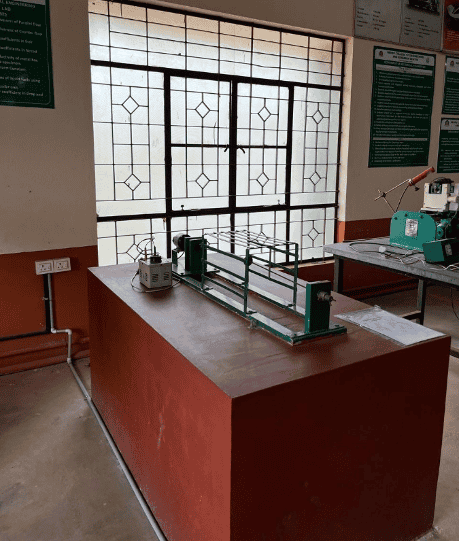
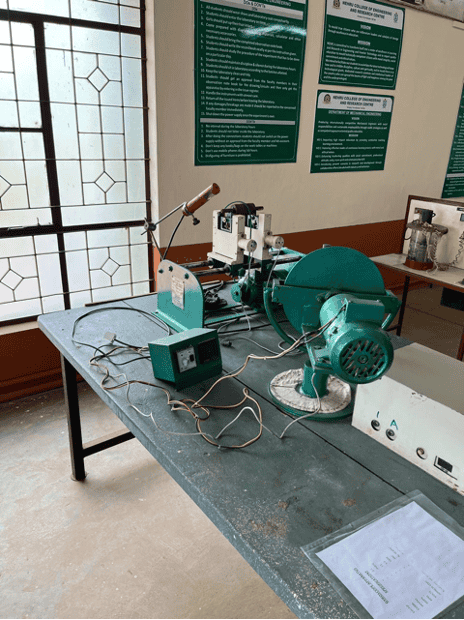
Laboratories: Maintenance and overall ambiance
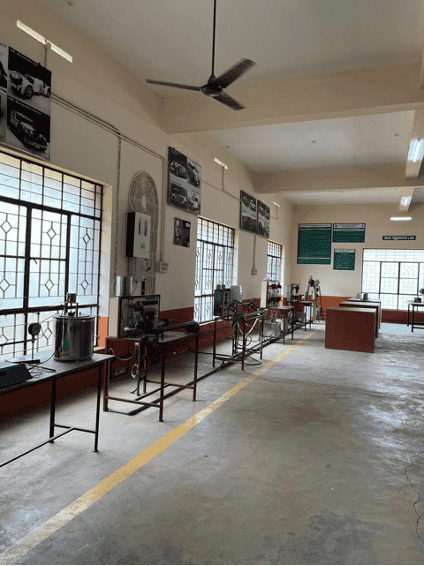
All labs are well equipped and have continuous power supply which ensures unhindered working of machines. Each laboratory maintains a Stock register detailing the equipment history within it. One Teaching faculty and a Lab instructor will be in charge of the overall functioning/maintenance of each lab.
Maintenance of Laboratory Equipment
- Regular check-up of computers/equipment is carried out as and when required and at the end of every semester.
- Maintenance register is maintained in the laboratories.
- Each laboratory maintains a stock register detailing the equipment history within it.
- As per requirement minor repairs are carried out by the lab assistant.
- Major repairs are outsourced.
- Dos and don’ts, safety measure rules are displayed in each laboratory.
- Well Technical Staff are available for maintenance of Electronic equipment and software.
- Department has UPS supply which is used in case of power failure in Laboratories.
- One teaching faculty and a lab instructor are in-charge of the overall functioning /maintenance of each lab.
Overall ambience
- All laboratories are equipped with state of art equipment’s to meet the requirements of curriculum.
- All laboratories are well furnished.
- All labs are supported by uninterrupted power supply which ensures that all laboratory slots are utilized effectively.
- Laboratories kept open beyond office hours as per the need.
- Sufficient number of windows is available for ventilation and natural light and every lab has one exit.
- Lighting system is very effective, along with the natural light in every corner of the rooms.
- Conditions of chairs/benches are in good condition. Chair with desk are provided for individual students in Labs.
- Each Lab is equipped with white/black board, computer, Internet, and such other amenities.
- A project lab has been provided for the students to carry out their mini and major project work.
- Cup-boards are available in each lab for students to place their belongings.
- Labs are equipped with sufficient hardware and licensed software to run program specific curriculum and off program curriculum.
- All labs are open for students and faculties for research.
- All the software & research labs are provided with ICT facilities.
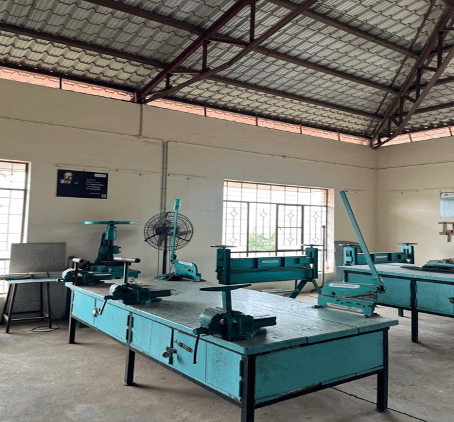
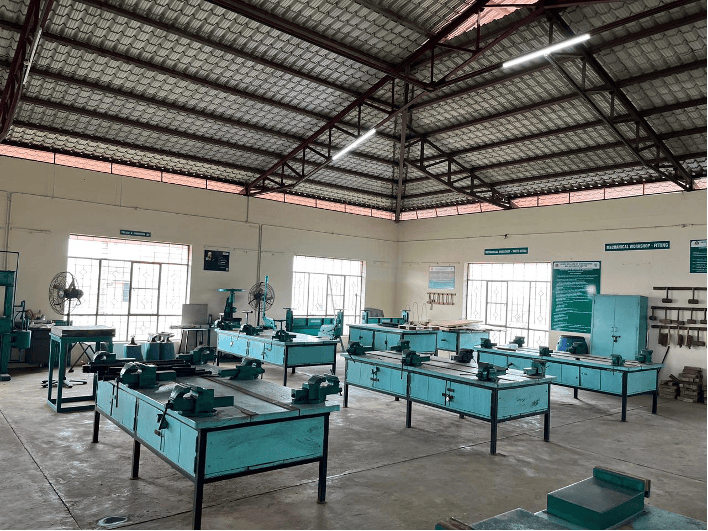
Mechanical Workshop
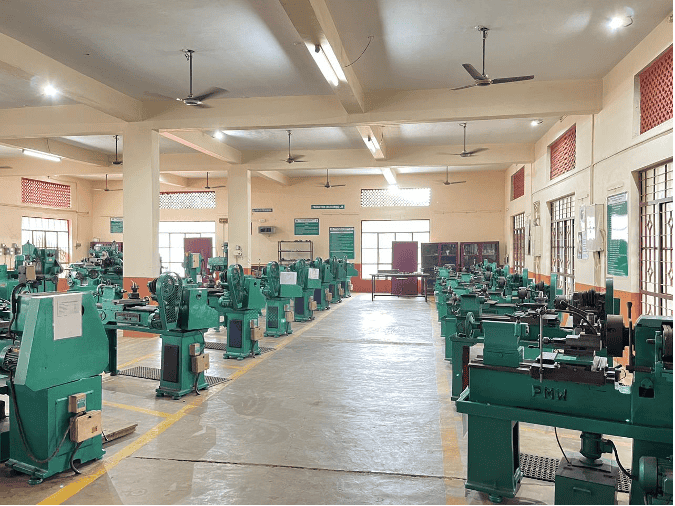
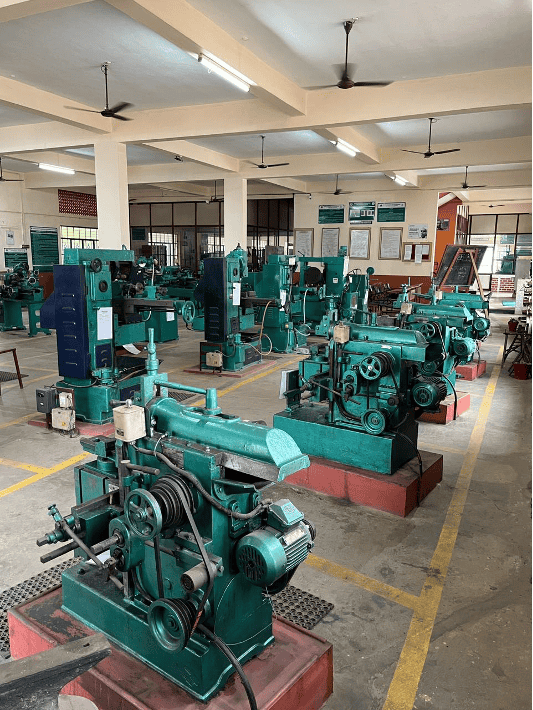
The workshop is the introductory space where students learn the fundamentals of fabrication and "hands-on" manufacturing. It typically includes specialized sections for fitting, carpentry, smithy, and welding, allowing students to understand how raw materials are shaped. You’ll find traditional machines like lathes and shapers used to create basic mechanical components. It emphasizes the importance of manual dexterity and safety protocols in a practical environment.
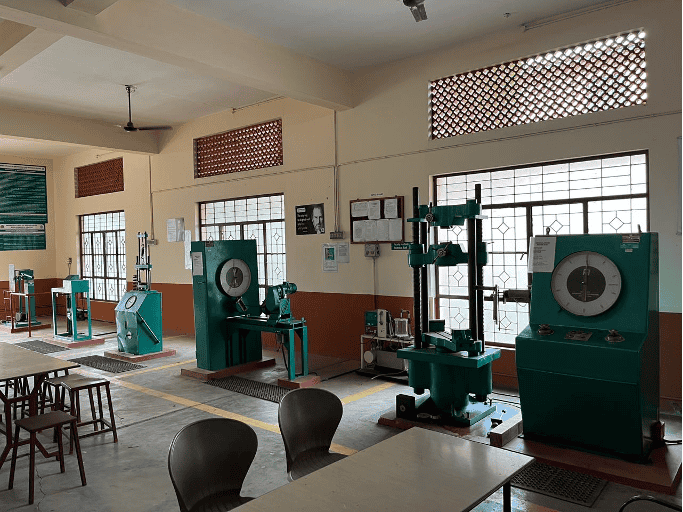
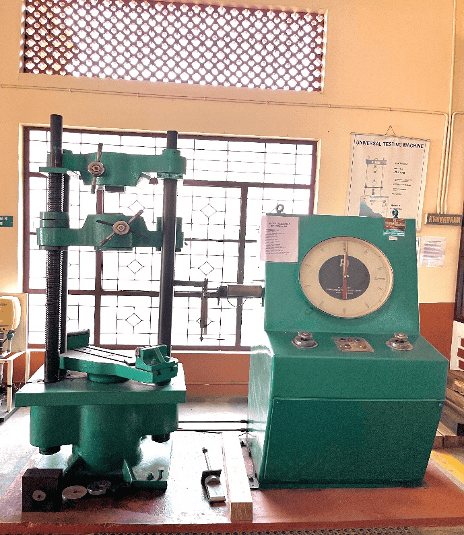
Strength of Materials Lab
This lab focuses on how solid objects deform and fail under various types of loading. Students use Universal Testing Machines (UTM) to perform tension, compression, and shear tests on materials like steel and aluminium. By measuring stress and strain, the lab helps determine critical properties such as elasticity, hardness, and toughness. These insights are vital for designing safe structures and machine parts.
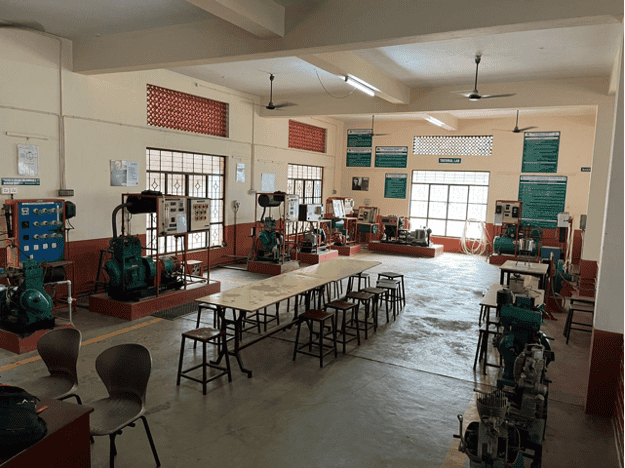
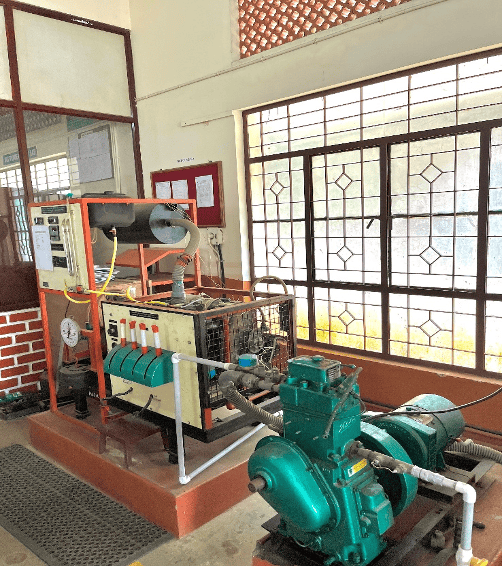
Thermal Lab
The Thermal lab explores the conversion of energy into work, primarily through the study of internal combustion engines. It features setups for testing the performance of petrol and diesel engines, including multi-cylinder test rigs to calculate thermal efficiency. Students also study the properties of fuels and the behaviour of steam in power cycles. This data is essential for improving engine performance and reducing emissions.
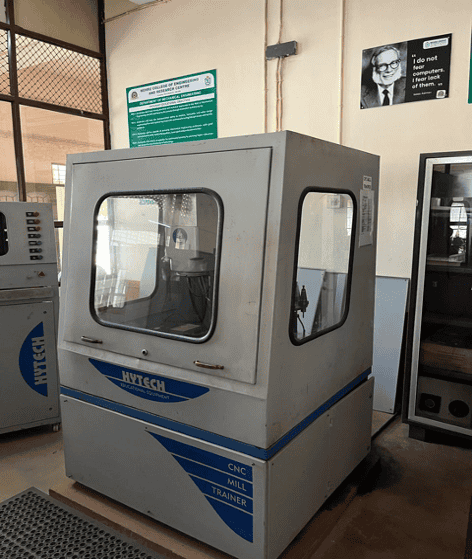
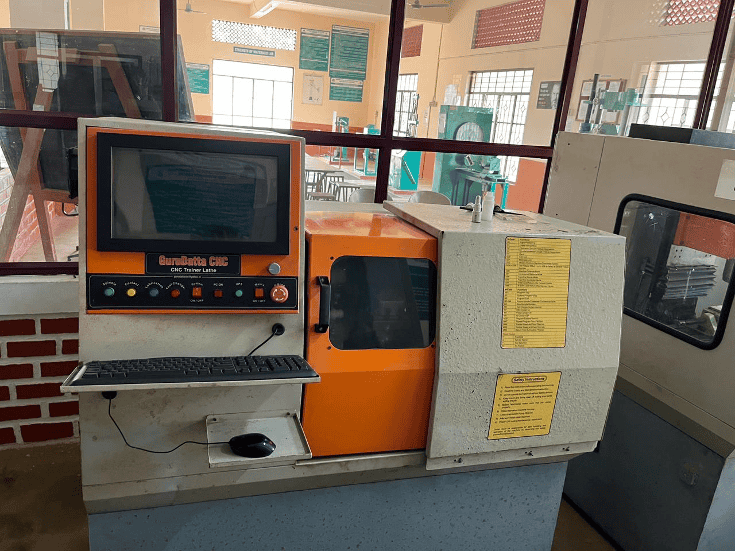
CNC Lab
This facility transitions from manual machining to automated, high-precision manufacturing. It houses Computer Numerical Control (CNC) lathes and milling machines that are programmed to execute complex cuts with extreme accuracy. Students learn to write G-code and M-code to automate the production of intricate parts. It represents the modern industrial standard for mass production and precision engineering.
Instrumentation Lab
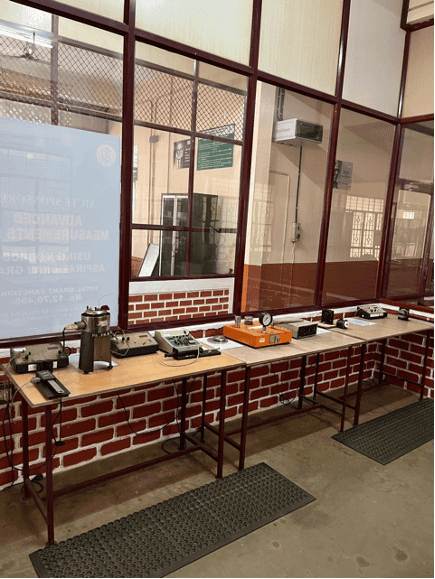
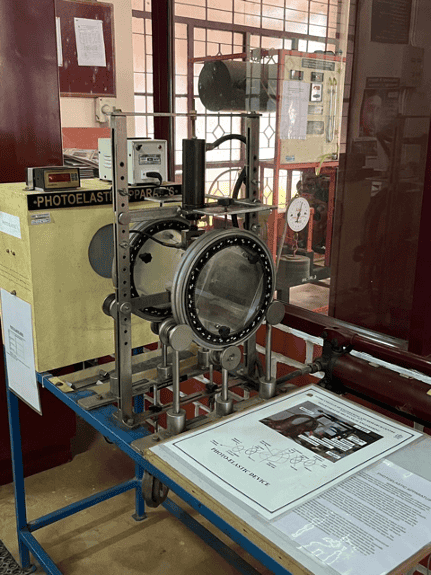
The Instrumentation lab is dedicated to the science of measurement and control systems. Students learn to use sensors and transducers to measure physical variables like pressure, temperature, displacement, and vibration. The lab often involves integrating these sensors with data acquisition systems and microcontrollers. Understanding these tools is crucial for monitoring industrial processes and ensuring machine health.
Production Lab
This lab dives deeper into the technical aspects of manufacturing processes and metrology. It focuses on the study of tool geometry, chip formation, and the mechanics of metal cutting. Additionally, it includes precision measurement tools like micrometers, sine bars, and profile projectors to ensure parts meet strict tolerances. It provides the technical foundation for optimizing factory floor operations.
Fluid Lab
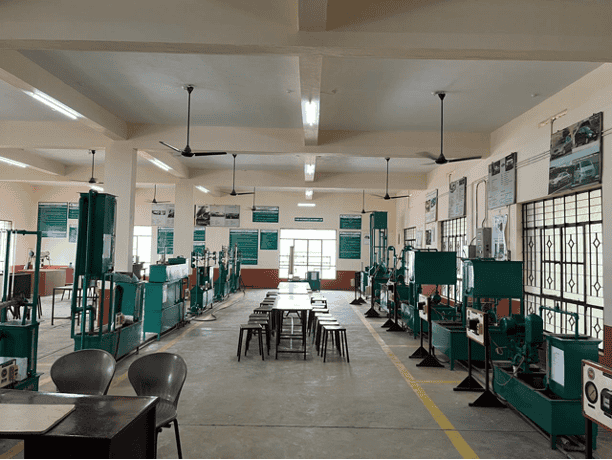
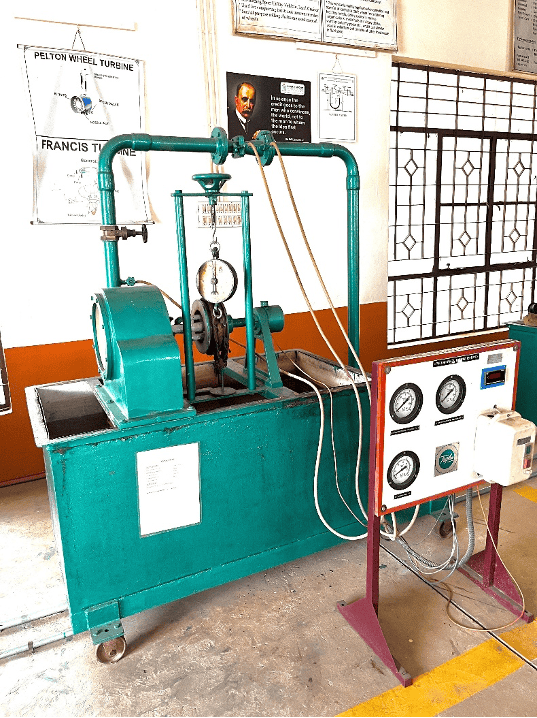
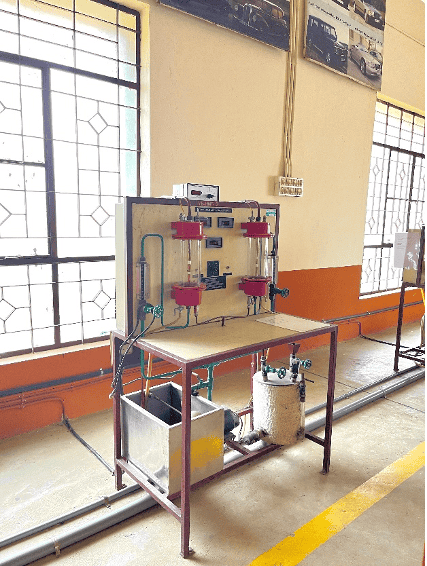
The Fluid Mechanics lab deals with the behaviour of liquids and gases at rest and in motion. Experimental setups include Bernoulli’s theorem apparatus, Venturi meters, and orifice plates to study flow rates and pressure drops. Students also test the performance of hydraulic machinery like centrifugal pumps and various water turbines (Pelton, Francis, Kaplan). These studies are fundamental to designing piping systems and hydroelectric plants.
Heat Transfer Lab
This lab investigates the three modes of energy exchange: conduction, convection, and radiation. Experiments often involve measuring the thermal conductivity of solids or observing heat exchange in parallel and counter-flow heat exchangers. Students analyze how different materials and surface geometries affect the rate of cooling or heating. This knowledge is applied directly to the design of radiators, refrigerators, and cooling systems for electronics.
CAD Lab
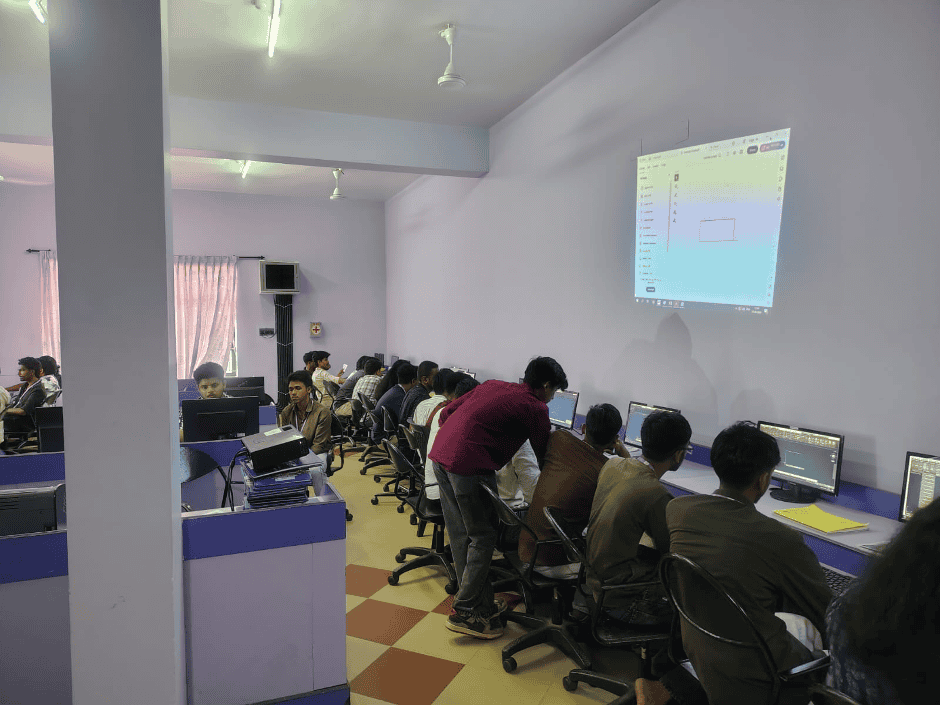
The Computer - Aided Design (CAD) lab is a digital workspace for modeling and simulating mechanical systems. Using professional software like SolidWorks, AutoCAD, or CATIA, students create 3D representations of complex assemblies. The lab also introduces finite element analysis (FEA) to simulate how these designs would react to real-world forces. It is the primary environment for the conceptual and detail-design phases of engineering.
Mechanical Engineering Lab
Often a "capstone" or comprehensive facility, this lab integrates multiple disciplines to study complex mechanical systems. It focuses on the dynamics of machinery, covering topics like governors, gyroscopes, and balancing of rotating masses. Students observe the effects of vibration and friction on mechanical links and mechanisms. It serves as a final proving ground where various engineering principles converge into a single functional system.